
Pop-Art and Fashion: A Timeless Connection
In the kaleidoscopic world of Pop Art, vivid hues and daring compositions collide, creating a cultural tapestry that continues to influence the fashion industry today. Originating in the mid-20th century, Pop Art emerged as a rebellious response to the traditional art world, celebrating the mundane and the commercial. This avant-garde movement didn’t merely confine itself to canvases; it seeped into the fabric of fashion, crafting a timeless connection that remains vibrant and unyielding.
The Genesis of Pop Art
Pop Art was born in the bustling cities of London and New York during the 1950s and 1960s, spearheaded by luminaries such as Andy Warhol, Roy Lichtenstein, and Richard Hamilton. Characterised by its bold colours and incorporation of popular culture elements, Pop Art challenged the elitist boundaries of fine art by embracing consumer goods, advertising, and media. This artistic revolution mirrored the social changes of the era, reflecting a world increasingly dominated by mass production and consumerism.
Fashion, as an inherently visual medium, found a natural ally in Pop Art’s striking aesthetic. Designers saw an opportunity to infuse their creations with the movement’s playful irreverence, leading to a harmonious blend of art and apparel that transcended traditional boundaries.
Iconic Collaborations and Inspirations
One cannot discuss the marriage of Pop Art and fashion without mentioning the legendary collaboration between Andy Warhol and Yves Saint Laurent. In 1974, the French designer paid homage to Warhol’s iconic Marilyn Monroe prints through a collection that echoed the vibrant colour palette and repetitive motifs characteristic of Warhol’s work. This partnership set a precedent, encouraging designers to view art as an integral part of fashion’s narrative.
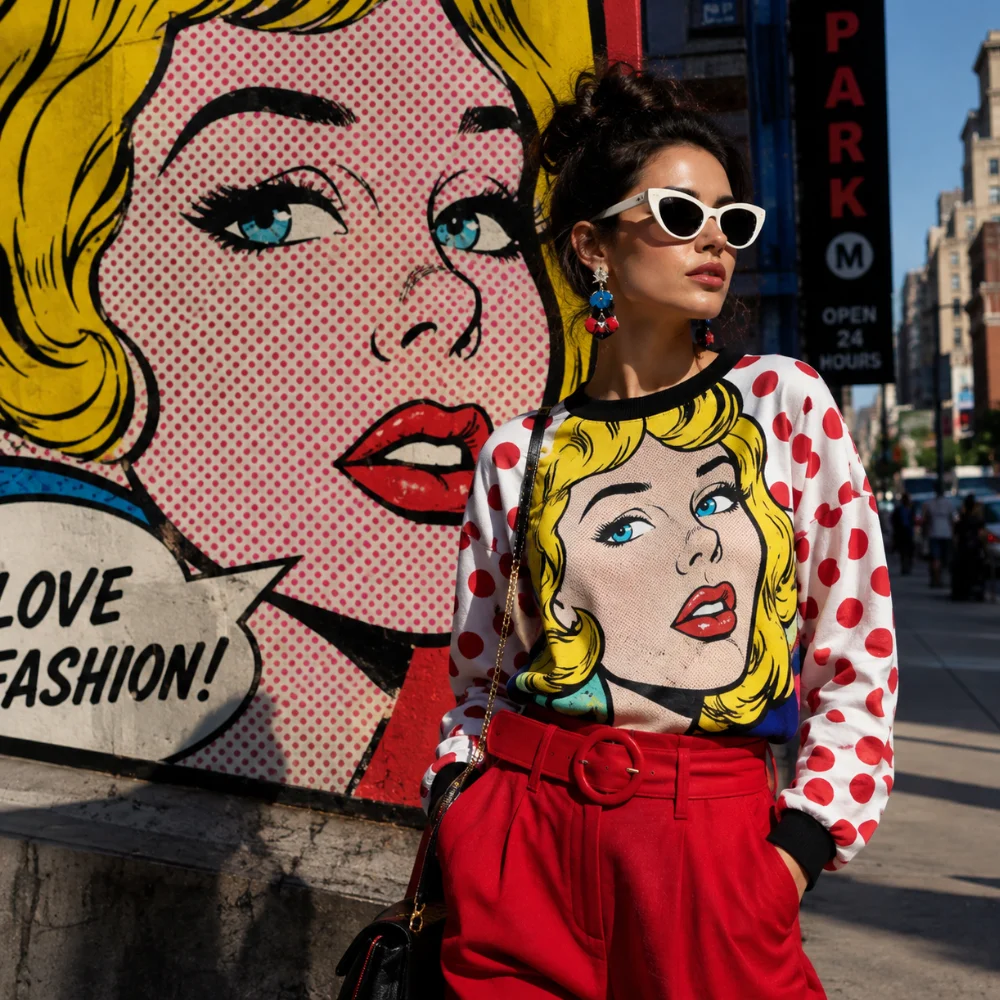
In more recent times, the Italian fashion house Prada has drawn inspiration from the works of Roy Lichtenstein, incorporating his signature comic strip style into their collections. The playful use of speech bubbles and graphic patterns showcases how Pop Art continues to serve as a wellspring of creativity for contemporary designers.
Pop Art’s Influence on Modern Fashion
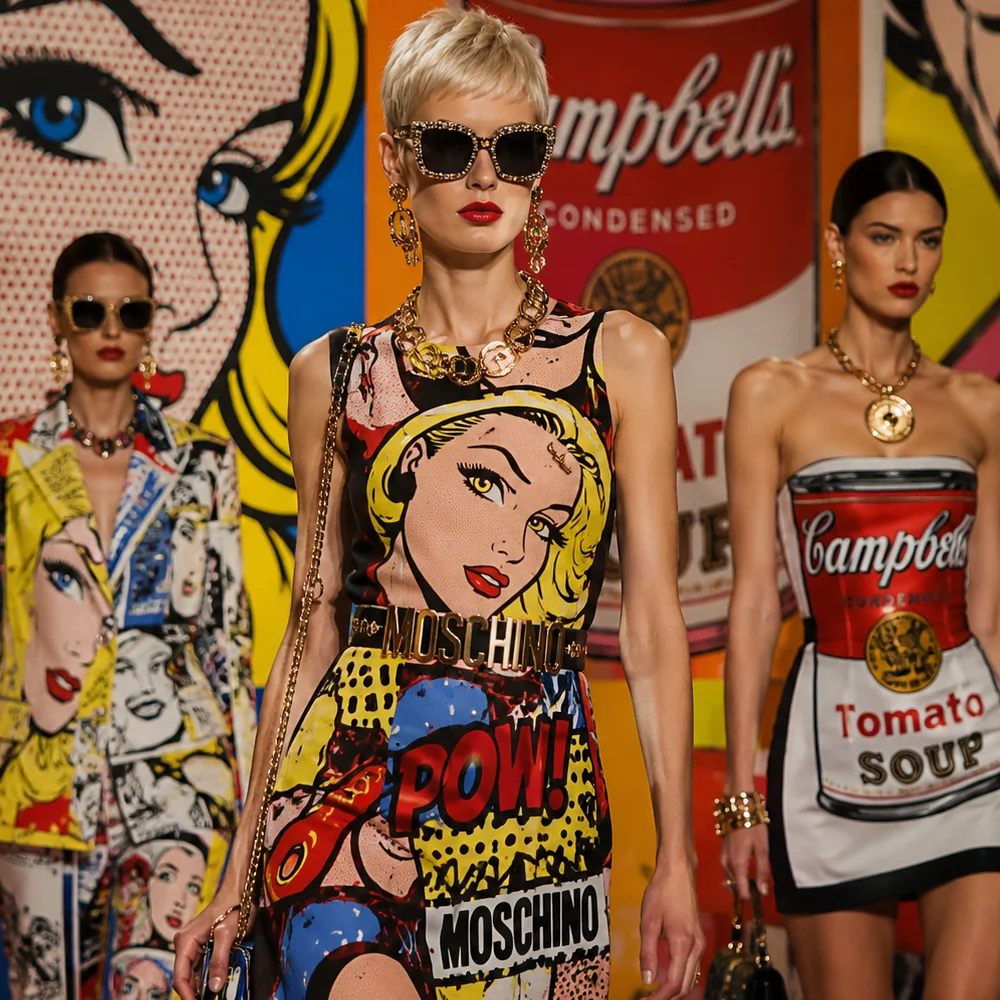
The impact of Pop Art on modern fashion is both profound and pervasive. The movement’s emphasis on bold graphics and vibrant colours resonates with today’s fashion-forward individuals who seek to express their personalities through unique and daring styles. Designers like Jeremy Scott for Moschino and Donatella Versace have embraced this ethos, infusing their collections with a sense of whimsy and nostalgia reminiscent of Pop Art’s golden era.
Furthermore, the advent of digital printing technology has allowed designers to experiment with Pop Art motifs in ways previously unimaginable. This innovation has led to a resurgence of interest in the movement, with fashion houses creating pieces that are not only wearable but also works of art in their own right.
Practical Ways to Incorporate Pop Art into Your Wardrobe
For those inspired by the vibrant world of Pop Art, there are myriad ways to incorporate its elements into everyday fashion. Begin with accessories – a handbag adorned with bold graphics or a scarf featuring a classic Warhol print can serve as the perfect introduction to this dynamic aesthetic.
For the more adventurous, consider incorporating Pop Art-inspired patterns into your clothing. Look for dresses or blouses with graphic prints, or opt for a coat in a striking primary colour that evokes the movement’s playful spirit. Mixing and matching these pieces with more neutral items can create a balanced yet eye-catching ensemble.
Footwear, too, offers a canvas for Pop Art expression. Seek out shoes with unexpected colour combinations or graphic designs that add a touch of whimsy to any outfit. The key is to embrace the boldness that Pop Art champions, allowing your personal style to reflect its exuberant energy.
The Enduring Legacy of Pop Art in Fashion
As we navigate the ever-evolving landscape of fashion, the enduring legacy of Pop Art remains a vibrant and inspiring force. Its ability to challenge conventions and celebrate the beauty in everyday objects continues to resonate with designers and fashion enthusiasts alike. The movement’s timeless appeal lies in its capacity to transform the mundane into the extraordinary, a philosophy that fashion, in its quest for innovation, will always embrace.
In the end, Pop Art’s influence on fashion is a testament to the power of creativity and the limitless possibilities that arise when art and design collide. It encourages us all to view the world through a more colourful lens, finding beauty in the unexpected and celebrating the joy of self-expression.