

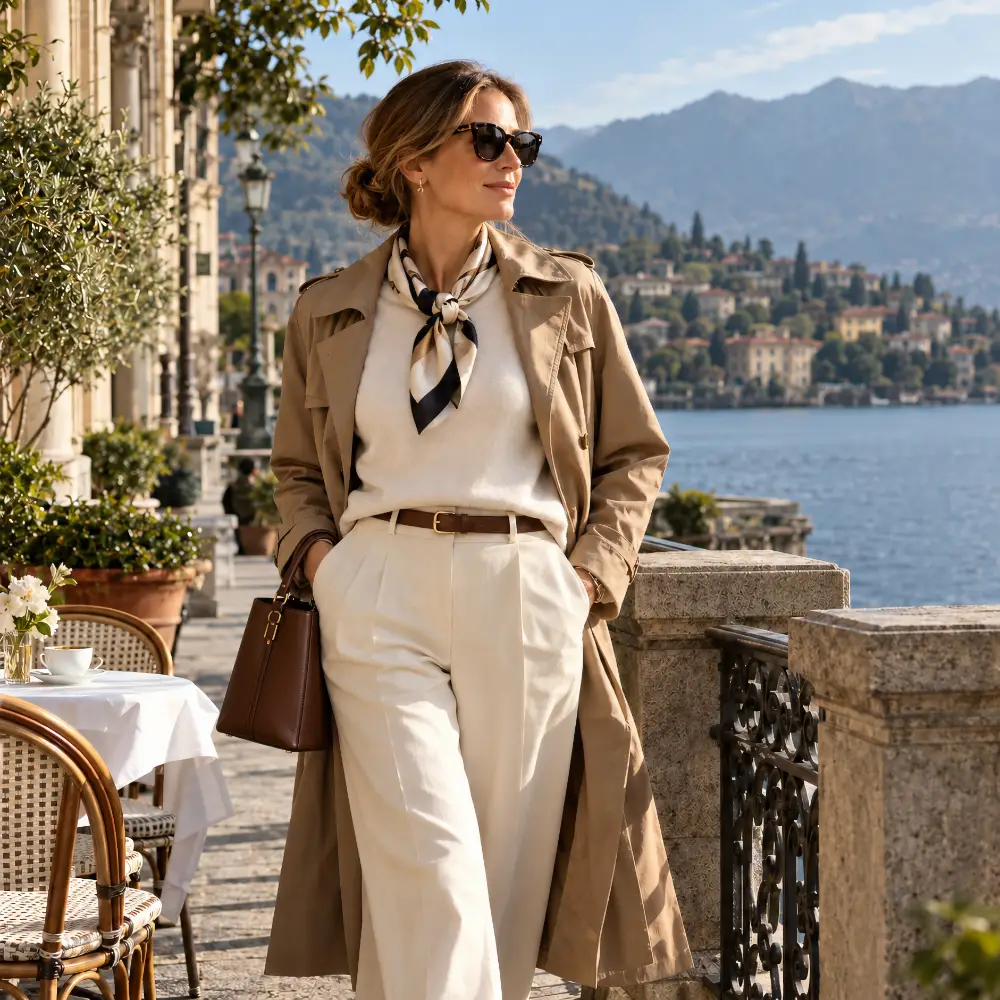
For generations, we have dressed according to the calendar. Wool in winter, linen in summer, lightweight jackets in spring and carefully layered knits in autumn. But as warmer autumns, unpredictable winters and increasingly changeable temperatures reshape the way we experience the seasons, the traditional four-season wardrobe is beginning to feel outdated. In its place, a more intelligent approach to dressing is emerging, one built around breathable fabrics, adaptable layers and beautifully considered pieces that work throughout the year.
There was a time when the arrival of September brought a familiar sartorial ritual. Summer clothes were folded away, cashmere returned to the wardrobe and heavier coats emerged from storage. The first cool mornings offered a welcome excuse to rediscover favourite autumn pieces. Today, however, that transition is rarely so straightforward. October afternoons can feel remarkably like late summer, while a crisp morning might give way to unexpected warmth by lunchtime. A weekend in Milan can demand an entirely different wardrobe from one in London, even when the calendar suggests otherwise.
For those who appreciate good clothes, this presents an interesting challenge. How do you maintain a refined, consistent personal style when the weather refuses to follow the traditional fashion calendar? The answer lies not in owning more clothes, but in choosing pieces that offer greater versatility. It is an approach closely connected to the principles of timeless dressing after 40, where quality, thoughtful tailoring and personal expression take precedence over fleeting trends.
Why the Four-Season Wardrobe Is Losing Its Relevance
The fashion industry has traditionally organised its collections around two principal seasons: spring/summer and autumn/winter. Retailers follow a similar rhythm, introducing heavier fabrics and winter outerwear long before temperatures necessarily justify wearing them. Yet the climate is becoming less predictable, and the familiar relationship between fashion seasons and actual weather is increasingly difficult to maintain.
Across much of Europe, warmer autumns and increasingly frequent periods of unusual heat are changing how people dress. The European Environment Agency has documented a long-term rise in temperatures across the continent, with Europe warming faster than the global average. For consumers, the consequences are surprisingly practical. A substantial wool coat purchased in September may remain untouched until December, while lightweight trousers can stay in regular rotation well into November.
Of course, geography still matters. A winter in Copenhagen is very different from one in Lisbon, and the Scottish Highlands will always demand more substantial protection than the French Riviera. What is changing is the assumption that an entire wardrobe should be replaced simply because the calendar moves from one season to another. Increasingly, the most useful wardrobe is one designed around temperature, activity and personal comfort rather than fixed seasonal categories.
The New Luxury: Fabrics That Adapt
The foundation of a modern, seasonless wardrobe begins with fabric. Beautiful materials have always been central to sophisticated dressing, but their practical properties are becoming just as important as their appearance. Rather than separating summer and winter clothing into entirely different collections, the emphasis is shifting towards fabrics that perform comfortably across a wider range of temperatures.
Fine merino wool is among the most versatile materials available. Unlike the heavy wool traditionally associated with winter, lightweight merino fibres can help regulate temperature while remaining breathable. A fine-gauge merino jumper works beautifully beneath a tailored jacket on a cool morning, yet can be worn comfortably on its own when temperatures rise. British knitwear specialist John Smedley demonstrates how merino can feel exceptionally refined without unnecessary weight. Lightweight crewnecks, knitted polo shirts and fine roll-necks in neutral colours are particularly useful for travelling between destinations with different climates.
Linen, meanwhile, deserves a place beyond the summer wardrobe. A beautifully cut linen shirt can sit beneath a cashmere cardigan in October, while linen-blend trousers offer a comfortable alternative to heavier wool tailoring during unexpectedly warm autumn afternoons. For greater versatility, linen blended with cotton, wool or silk can provide a softer drape and a more substantial feel. The enduring appeal of this natural fibre is explored further in Linen Style: Timeless Summer Elegance, where breathable materials and understated sophistication come together.
High-quality cotton poplin, silk-cotton blends and lightweight cashmere complete the picture. Cotton offers structure without excessive warmth, silk adds softness and movement, while fine cashmere provides insulation without the bulk of traditional winter knitwear. The important distinction is between fabric weight and fabric quality. A beautifully made lightweight garment can be considerably more useful than a heavier piece reserved for only a few weeks each year.
The Art of Layering Without Looking Overdressed
Layering is hardly a new concept, but the way we approach it is evolving. Traditional winter layering often focused primarily on warmth. Contemporary layering must offer something more sophisticated: the ability to adjust throughout the day without compromising the overall silhouette.
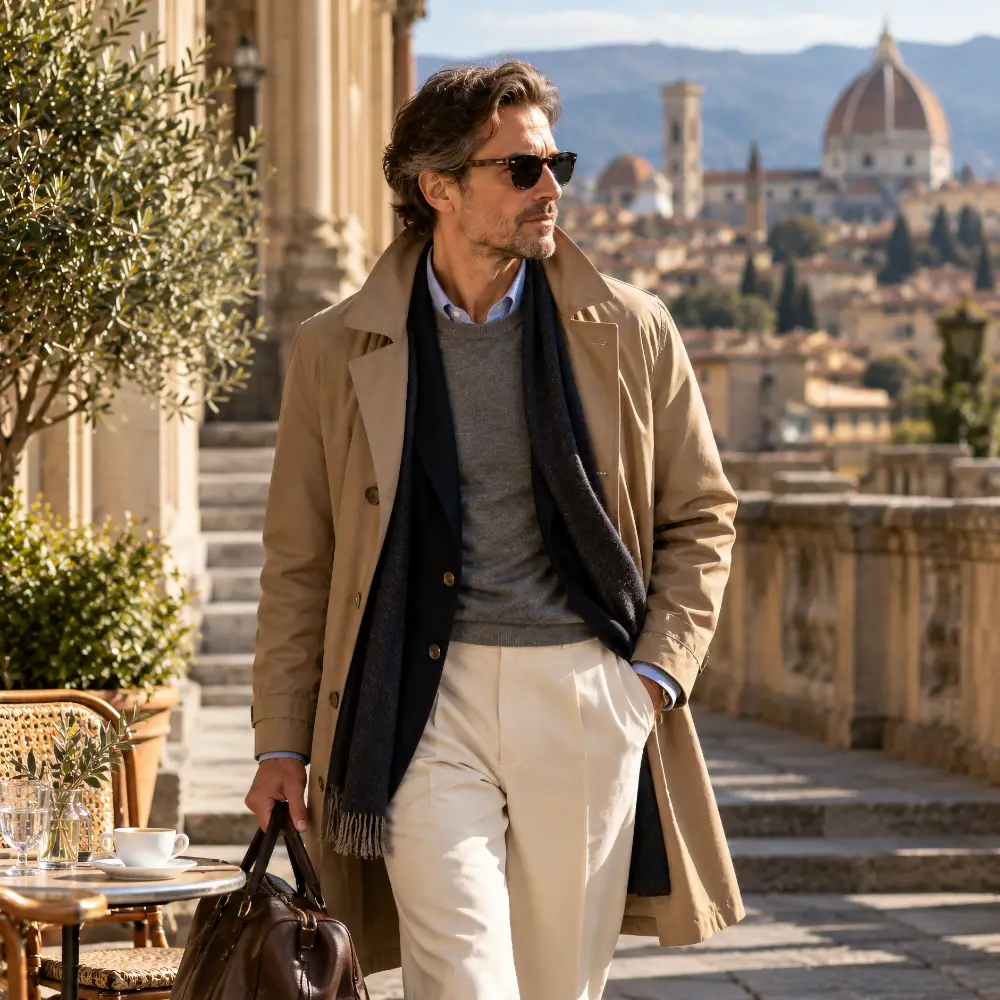
Imagine an October morning in Florence. The air is cool enough for a jacket as you walk towards your favourite café. By midday, sunlight has warmed the stone façades and outdoor terraces. Later, as evening approaches, the temperature drops again. An adaptable outfit should accommodate all three moments without requiring an entirely different wardrobe.
The most effective approach begins with a breathable foundation, such as a cotton shirt, lightweight merino polo or fine-gauge knitted top. An unstructured blazer, cashmere cardigan or lightweight overshirt provides the middle layer, adding warmth and visual interest without excessive bulk. Finally, a trench coat or softly tailored outer jacket offers protection against wind and cooler temperatures.
The secret lies in proportion and texture. A fine knitted polo beneath an unstructured blazer feels intentional, while several heavy layers competing for space around the shoulders rarely do. For a particularly versatile combination, consider tailored wool trousers, a fine merino crewneck and a lightweight trench coat. Each piece works independently, while the complete outfit remains appropriate for everything from a business lunch to an evening restaurant reservation.
Small details can make these combinations feel particularly sophisticated. The contrast between crisp cotton and soft knitwear, the subtle sheen of a silk scarf or the texture of a suede accessory can elevate an otherwise simple outfit. It is precisely this philosophy that defines The Subtle Power of Style Details, where thoughtful finishing touches create an impression of effortless elegance.
Adaptable Outerwear Is Replacing the Traditional Winter Coat
Perhaps the most significant change concerns outerwear. For decades, a substantial winter coat was considered an essential investment. While it remains indispensable in colder climates, many wardrobes now benefit from a broader selection of lighter, more adaptable alternatives.
The classic trench coat is an obvious example. Originally designed for practical protection, its enduring appeal lies in the balance between function and elegance. A well-cut trench can be worn over a shirt in September or layered over knitwear in November. Burberry remains closely associated with the traditional trench, while brands such as Mackintosh offer refined interpretations of weather-resistant outerwear.
Another increasingly useful option is the lightweight insulated jacket. Modern insulation allows manufacturers to create garments that provide warmth without the weight of traditional padded coats. Minimalist designs in navy, charcoal or olive can sit comfortably alongside tailored clothing, while a technical overshirt or water-resistant field jacket offers similar flexibility for more relaxed occasions.
The most useful details are often subtle: adjustable cuffs, discreet ventilation, removable linings and fabrics that resist light rain. These features allow one garment to serve several purposes without looking overtly technical. The objective is not to eliminate the winter coat, but to reserve it for genuinely cold conditions rather than wearing it simply because the calendar says winter has arrived.
Building a Wardrobe Around Versatility, Not Seasons
A seasonless wardrobe does not require replacing everything you own. In fact, its greatest advantage is that it encourages a more considered relationship with existing clothes. Begin by identifying the garments you already wear across several months. Perhaps a navy blazer remains useful from March until November, a favourite cotton shirt works equally well beneath a winter jumper or with linen trousers in summer, and a pair of beautifully made loafers rarely seems entirely out of place.
These are the pieces around which a more adaptable wardrobe can develop. A practical foundation might include two lightweight knitwear pieces, three breathable shirts, an unstructured blazer, tailored wool trousers, relaxed cotton chinos and a versatile overshirt. Add a weather-resistant trench or field jacket, together with a substantial coat for genuinely cold days, and the result is a collection capable of accommodating a surprisingly wide range of temperatures.
Colour plays an equally important role. A palette of navy, stone, charcoal, cream, chocolate brown and olive makes layering easier and reduces the need for entirely separate seasonal outfits. Texture can provide the variety traditionally created by seasonal colour changes. Fine wool beside crisp cotton, suede against smooth leather or a softly structured jacket over lightweight knitwear creates depth without visual excess.
Footwear should follow the same principle. Leather loafers, refined suede trainers and versatile ankle boots can move comfortably between seasons, depending on the weather and occasion. For more relaxed combinations, the balance between comfort and sophistication is beautifully illustrated in Sneakers and Casual Outfits, where understated footwear becomes part of a polished everyday wardrobe.
The Travel Wardrobe Offers a Glimpse of the Future
Frequent travellers have long understood the advantages of dressing across seasons. A journey from Amsterdam to Rome in October can involve a considerable change in temperature. A morning departure might require a coat, while arrival in Italy calls for something considerably lighter. The same principle applies to longer journeys, particularly those combining cities, countryside and coastal destinations.
Rather than packing separate outfits for every anticipated temperature, experienced travellers increasingly rely on pieces that can be combined in different ways. A lightweight blazer might accompany tailored trousers to dinner, then work with dark denim for a relaxed afternoon. A fine cashmere jumper can be worn during a flight, layered beneath a jacket or draped over the shoulders on a warmer day.
Consider a journey through northern Italy, from the lakes to the Ligurian coast and onwards into Tuscany. The changing landscapes bring equally varied conditions, from cool lakeside mornings to sunlit afternoons beside the Mediterranean. A carefully selected wardrobe of breathable layers makes these transitions considerably easier. The contrasts between these destinations are beautifully captured in the Dolce Vita Route: Lakes, Riviera & Tuscany, where different regions offer their own distinctive atmosphere.
The result is a smaller suitcase containing clothes that feel appropriate in more situations. It is also an approach that translates naturally into everyday life, particularly for those who divide their time between work, travel, social occasions and weekends away.
Buy Less Seasonally, Invest More Intelligently
As traditional seasonal boundaries become less distinct, the economics of a well-curated wardrobe are changing. A beautifully made jacket worn eight months of the year may represent better value than an equally expensive piece used for only six weeks. This is where the concept of cost per wear becomes particularly relevant.
Consider a £600 blazer worn twice a week for 35 weeks each year. Over five years, that represents approximately 350 occasions, bringing its cost per wear to around £1.71. By comparison, a £400 seasonal jacket worn just ten times annually costs £8 per wear over the same period. Naturally, longevity depends on quality, maintenance and whether the garment continues to suit your personal style, but the principle is clear: versatility can make investment dressing considerably more sensible.
When choosing new clothes, consider how they will function beyond the season in which they are purchased. A beautifully tailored jacket that works with several existing outfits may offer more lasting satisfaction than a fashionable coat designed around a fleeting autumn trend. Construction matters, too. Breathable linings, natural fibres, comfortable shoulder structures and tailoring that allows movement all contribute to a garment’s long-term usefulness.
A More Considered Way to Dress
The disappearance of rigid seasonal boundaries does not mean abandoning the pleasures of seasonal dressing. There will always be something wonderful about the first opportunity to wear a favourite cashmere jumper, the reassuring weight of a winter coat or the relaxed elegance of linen on a warm summer evening. What is changing is the need to confine those pleasures to particular months.
The modern wardrobe is becoming more fluid, allowing beautiful clothes to remain relevant for longer and adapting naturally to the unpredictable rhythm of contemporary life. For those who value craftsmanship, quality and enduring personal style, this evolution feels particularly appropriate. A fine merino jumper does not need to belong exclusively to autumn, a linen shirt need not disappear after August, and a beautifully cut trench coat can remain one of the most useful garments in the wardrobe for much of the year.
The future of sophisticated dressing may no longer be defined by four distinct seasons, but by a collection of exceptional pieces chosen for how comfortably, elegantly and effortlessly they work together.