

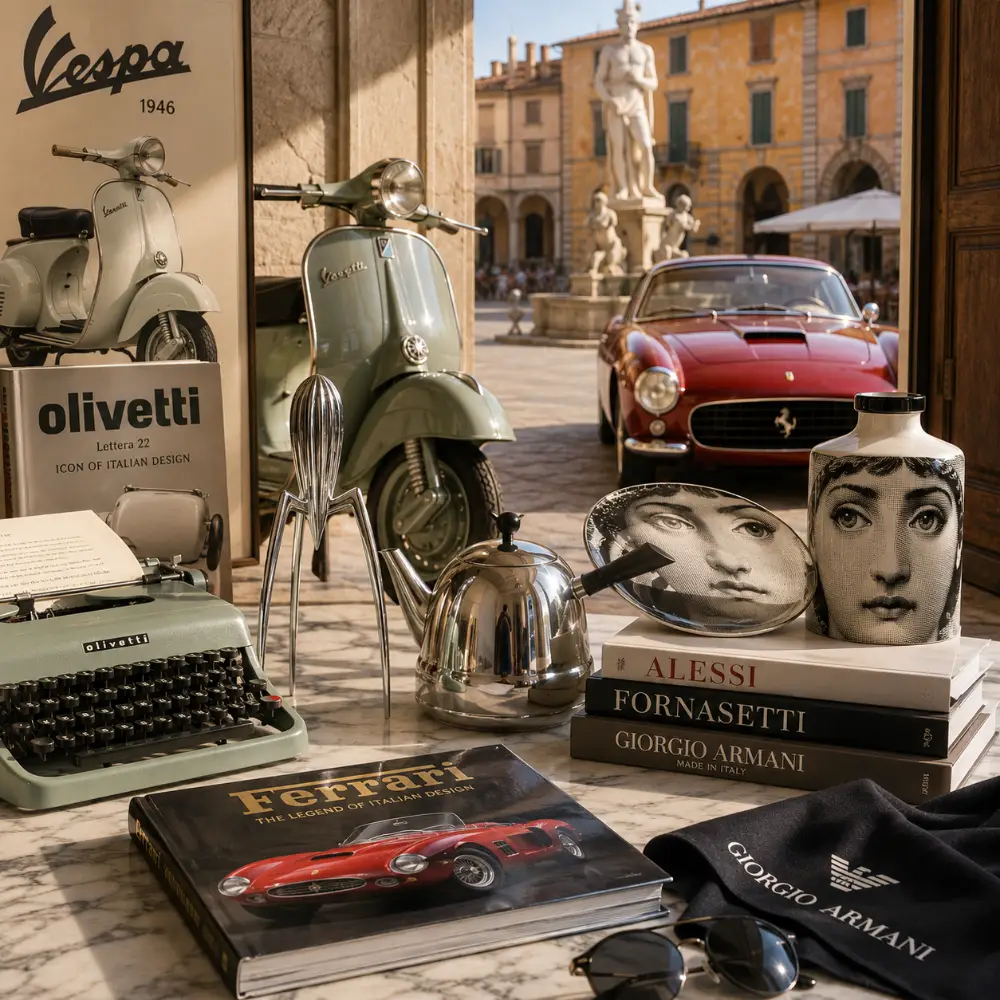
In the realm of style and elegance, Italian design stands as a beacon of sophistication, merging tradition with innovation. From the graceful curves of a Vespa to the luxurious interiors of a Ferrari, Italian design is a celebration of form and function. This article delves into the icons that have defined Italian design, offering a curated journey through its most illustrious creations.
The Vespa: A Timeless Symbol of Freedom
Since its inception in 1946, the Vespa has become synonymous with Italian flair and effortless mobility. Designed by Corradino D’Ascanio, this scooter was a response to post-war Italy’s need for affordable transportation. Its iconic shape reminiscent of a wasp, hence the name ‘Vespa’ captures a sense of freedom and adventure that has enchanted generations.
Owning a Vespa is not merely about practicality; it is an immersion into a lifestyle. Imagine the sensation of the wind against your face as you glide through the cobbled streets of Rome or the Tuscan countryside. For those seeking a touch of nostalgia, consider exploring the Vespa Museum in Pontedera, Tuscany, where the evolution of this emblematic scooter is beautifully chronicled.
Ferrari: The Epitome of Luxury and Performance
In the world of automotive excellence, Ferrari is unrivalled. Founded by Enzo Ferrari in 1939, the brand has become a symbol of speed, luxury, and Italian craftsmanship. From the roar of a Ferrari engine to its sculpted bodywork, each vehicle embodies a passion for performance and beauty.
For enthusiasts, a visit to the Ferrari Museum in Maranello is a pilgrimage. Here, you can marvel at the legendary models that have graced both racetracks and silver screens. Consider the Ferrari 250 GTO, a masterpiece that combines aesthetic appeal with engineering prowess. It’s not just a car; it’s a testament to the brilliance of Italian design.
Olivetti: Innovation in Everyday Elegance
Olivetti’s typewriters and calculators are icons of industrial design, blending functionality with artistic grace. Founded in 1908 by Camillo Olivetti, the company revolutionised office machinery, transforming mundane tools into objects of beauty.
The Lettera 22, a portable typewriter from the 1950s, is celebrated for its sleek design and efficiency. It became a favourite among journalists and writers, including the likes of Ernest Hemingway. The Olivetti ethos, where design meets innovation, continues to inspire. For a taste of this legacy, the Olivetti Showroom in Venice, designed by Carlo Scarpa, offers an exquisite display of the brand’s history.
Alessi: The Art of Kitchenware
Alessi is renowned for transforming everyday kitchen utensils into works of art. Founded in 1921, the brand collaborates with designers to create pieces that are as functional as they are visually stunning. Alessi’s products, from whimsical kettles to elegant corkscrews, infuse kitchens with an Italian sense of style.
The Juicy Salif citrus squeezer, designed by Philippe Starck, is a prime example of Alessi’s playful approach to design. Its sculptural form is both a conversation piece and a practical tool. For those looking to elevate their kitchen aesthetics, Alessi’s flagship store in Milan showcases a range of items that embody the brand’s commitment to design excellence.
Fornasetti: Whimsy Meets Opulence
Fornasetti, founded by Piero Fornasetti, is celebrated for its surreal and imaginative designs. The brand’s creations range from furniture to home accessories, each piece a canvas for artistic expression. Fornasetti’s most iconic motif, the enigmatic face of opera singer Lina Cavalieri, adorns everything from plates to wall coverings.
The Fornasetti Atelier in Milan is a testament to the brand’s unique vision, offering a glimpse into a world where art and design converge. Consider acquiring a piece from their collection to add a touch of whimsy and sophistication to your living space.
Armani: The Quintessence of Italian Fashion
In the realm of fashion, Giorgio Armani is a name that resonates with elegance and understated luxury. Since launching his brand in 1975, Armani has redefined modern fashion with clean lines and timeless silhouettes. His influence extends beyond clothing to include home interiors and hotels, each project reflecting a commitment to quality and style.
The Armani Hotel in Milan exemplifies the designer’s aesthetic philosophy, offering an experience of refined luxury. Its minimalist design, coupled with impeccable service, provides a serene retreat in the heart of the city. For those who appreciate sartorial elegance, an Armani suit remains a quintessential addition to any wardrobe.
Conclusion: Celebrating Italian Design
Italian design icons are more than mere objects; they are embodiments of a rich cultural heritage that values beauty, innovation, and craftsmanship. From the streets of Rome to the ateliers of Milan, these creations inspire a lifestyle that embraces both tradition and modernity. As you explore the world of Italian design, allow yourself to be captivated by its artistry and elegance, and perhaps find a piece that resonates with your own sense of style.