
White Truffle Season: How to Experience Alba Beyond the Shavings
There is a moment in an autumn restaurant in Piedmont when conversation briefly stops. A small wooden box arrives at the table, its lid is lifted, and before anything has been grated, sliced or served, you smell it.
The aroma of the Alba white truffle is difficult to describe without sounding extravagant. Earth after rain, garlic, hay, honey, woodland and something faintly musky can all appear in its perfume. The Langhe’s official truffle sensory programme describes notes ranging from honey and garlic to wet earth, spices and fruit. Yet the pleasure is less about identifying individual aromas than experiencing their extraordinary intensity.
From 10 October to 6 December 2026, Alba hosts the 96th International Alba White Truffle Fair, bringing together truffle hunters, chefs, wine producers and visitors in the heart of Piedmont. The programme includes the White Truffle World Market, sensory workshops, cooking events and wine tastings.
But experiencing white truffle season properly requires more than ordering the most expensive dish on the menu. The real pleasure lies in understanding what you are smelling, knowing what to order, travelling beyond Alba itself and recognising when simplicity is far more luxurious than excess.
First, Learn What a White Truffle Should Smell Like
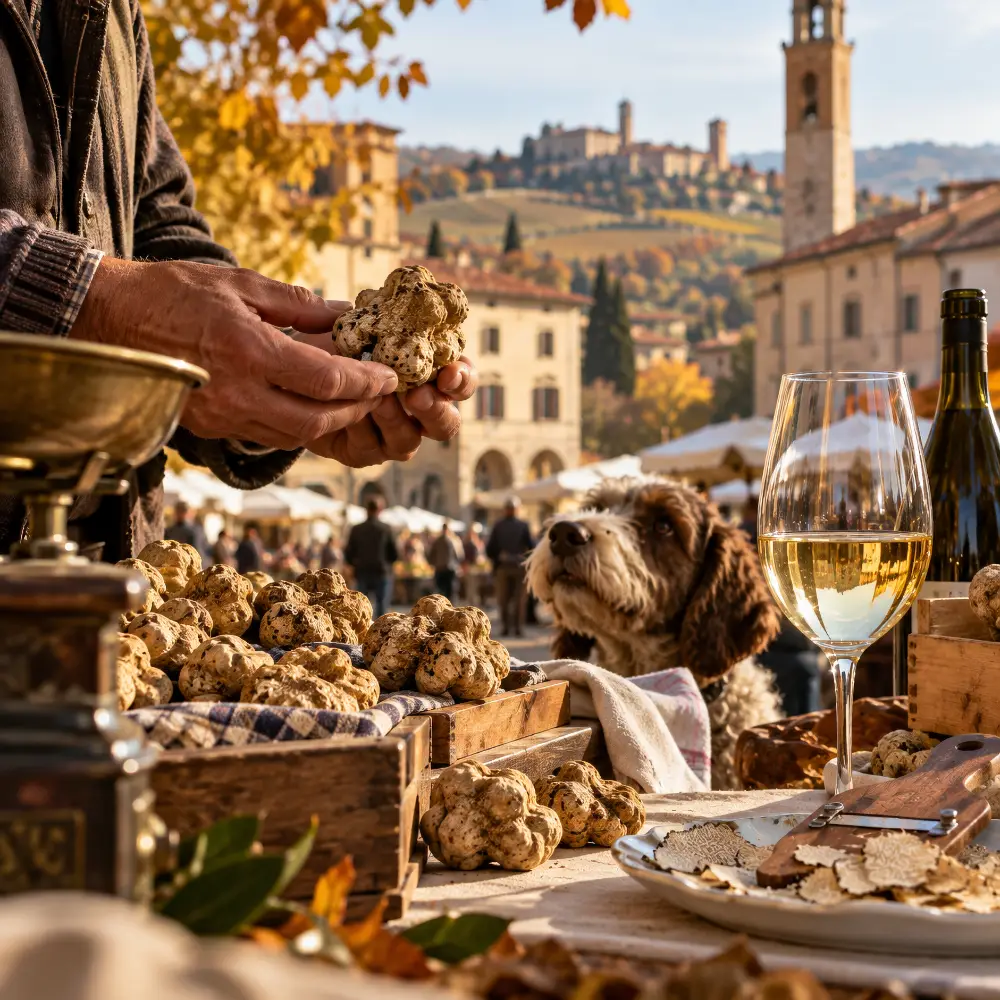
The prized Tuber magnatum Pico, commonly known as the Alba white truffle, grows underground in symbiosis with the roots of certain trees. Unlike cultivated mushrooms, it belongs to a landscape of woods, soil, weather and skilled trifolao, the local truffle hunters who search with trained dogs.
A good specimen should smell remarkably alive.
At the International Alba White Truffle Fair, resist the temptation to judge purely by size. Pick up the truffle if permitted. It should feel firm and compact rather than soft. Examine its irregular surface, but pay most attention to its perfume.
Freshness matters enormously because the aroma gradually diminishes after harvesting. A smaller, intensely fragrant truffle can therefore provide a more memorable experience than a large but tired specimen.
For a first visit, one of the most useful investments is not another tasting menu but a sensory lesson. Alba’s truffle sensory analysis sessions teach visitors to assess appearance, texture and aroma, including how to recognise the characteristics of a good truffle. During the 2026 fair, weekend sessions are held in the sensory analysis room at MUDET, Alba’s truffle museum.
Once you have smelled several examples side by side, ordering truffle becomes considerably less mysterious.
White Truffle Season in Alba: Start at the Market
The White Truffle World Market in the Cortile della Maddalena is the obvious starting point. During fair weekends, it brings producers and truffle specialists together under one roof and provides an opportunity to see the enormous variation between individual specimens.
Do not approach it simply as a shopping expedition.
Walk around first. Smell. Ask when a truffle was found. Look at several specimens before considering a purchase. Prices fluctuate according to supply, weather, quality, size and the particular season, so a fixed idea of what a truffle “should” cost is rarely helpful.
If buying one to take home, buy as late in your trip as practical. White truffle is intensely perishable. It should be kept refrigerated, individually wrapped in absorbent kitchen paper inside a sealed container, with the paper changed regularly, and enjoyed quickly.
And ignore the romantic idea of storing it in rice for days. Rice absorbs moisture and can encourage a precious fresh truffle to dry out.
The objective is not preservation. It is to eat it while it is still magnificent.
The Restaurant Etiquette Worth Knowing
In Alba during autumn, menus frequently offer dishes con tartufo bianco with the truffle charged separately, sometimes according to weight.
Ask how it is priced before ordering. This is neither inelegant nor miserly. When an ingredient can dramatically alter the price of a dish, understanding the arrangement is simply sensible.
The truffle should normally be shaved very thinly over the finished dish, often at the table. White truffle is not an ingredient that benefits from aggressive cooking. Heat from freshly prepared food is enough to release its volatile aromas.
The classic Piedmontese preparations are classics for a reason.
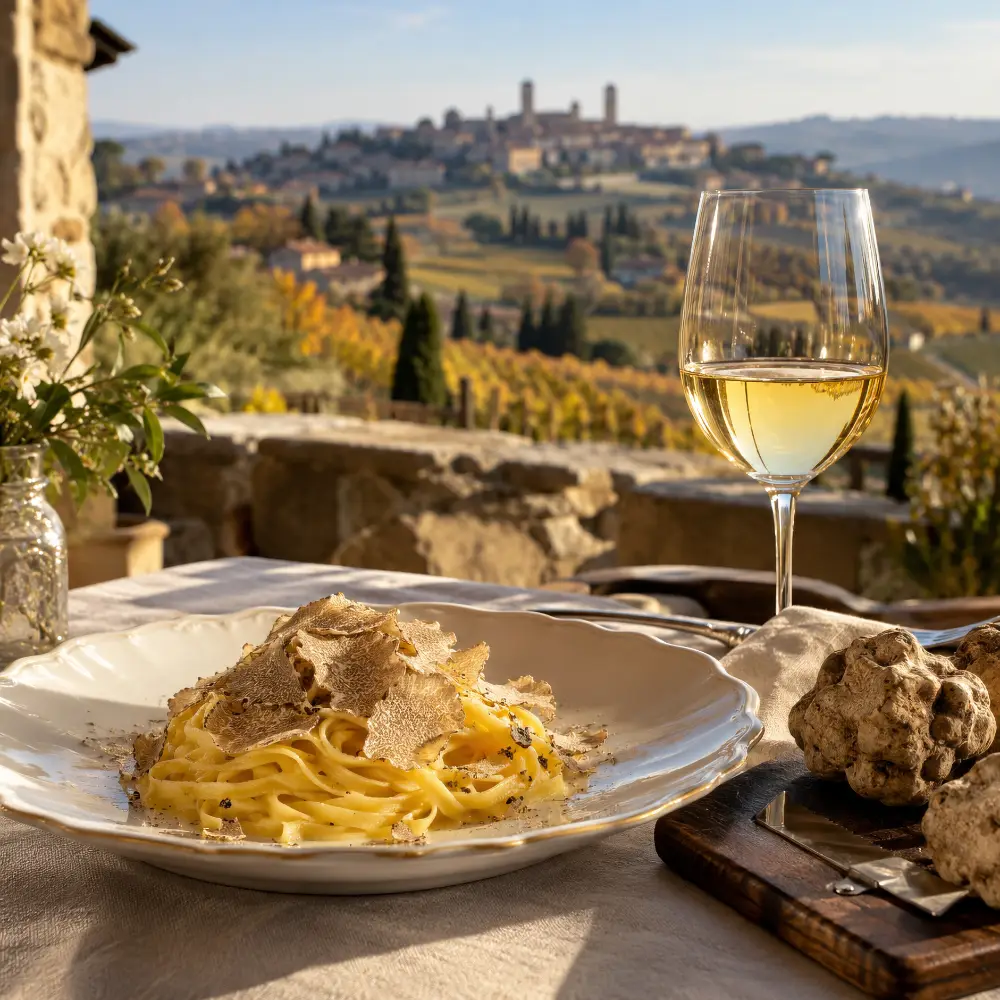
Tajarin, the region’s exceptionally fine egg pasta, is perhaps the perfect introduction. Butter and pasta provide richness without obscuring the perfume. Uovo al tegamino, a simple fried egg, is another superb partner because warm yolk and white truffle have an almost instinctive affinity.
You may also encounter it over fonduta, risotto, raw Fassona beef or delicately prepared potatoes.
A useful rule for first-timers is simple: the more expensive the truffle, the less complicated the dish beneath it should probably be.
The Difference Between Eating Truffle and Paying for Truffle
Luxury restaurants can make white truffle season feel theatrical: silver cloches, scales, wooden boxes and dramatic shaving at the table. Some theatre is enjoyable. But none of it compensates for a truffle without aroma.
The best question is not “How much truffle am I getting?” but “Can I actually smell it?”
A generous covering of mediocre shavings is less interesting than a smaller amount of wonderfully fresh truffle over perfect tajarin.
This is also why ordering truffle on several courses can become counterproductive. The first encounter is intoxicating; by the fourth dish, your senses have adapted.
One or two carefully chosen truffle dishes can be far more satisfying.
Make the first one simple. Smell the plate before tasting it. Allow the warmth of the food to release the fragrance. Then eat slowly enough to notice how aroma and flavour change together.
That is when white truffle stops being an expensive garnish and becomes an experience.
What to Drink With Alba White Truffle
It is tempting to assume that Piedmont’s grandest ingredient demands its grandest wine. Not necessarily.
White truffle is intensely aromatic but surprisingly delicate on the palate. The wine should support the dish beneath it rather than compete with the truffle itself.
With tajarin or egg, an elegant traditional-method Alta Langa sparkling wine can work beautifully, its acidity cutting through butter and yolk. The 2026 fair itself includes dedicated Alta Langa DOCG tastings alongside its truffle programme.
For red wine, Nebbiolo is the natural regional companion. Barbaresco can be particularly graceful, while mature Barolo brings earthy, autumnal complexity when the dish is sufficiently rich. Older bottles, where tannins have softened and tertiary aromas have developed, can create wonderful harmony.
The mistake is choosing a monumental young red simply because it is expensive. Powerful tannin, oak and alcohol can dominate precisely the aroma you travelled to Piedmont to experience.
Leave Alba and Follow the Landscape
Alba is the centre of the celebration, but white truffle makes more sense once you leave the town.
Drive south-west and vineyards begin climbing the hills towards La Morra and Barolo. In autumn, Nebbiolo vines turn shades of rust, ochre and burnt orange while morning mist settles into the valleys below.
La Morra deserves an unhurried stop for its sweeping view across the Langhe. Barolo combines its famous wine heritage with an intimate village scale. To the north-east, Neive offers cobbled lanes, brick houses and another perspective on the landscape of Barbaresco.
Roddi, only a short distance from Alba, is particularly relevant during truffle season. Its castle hosts gastronomic experiences during the 2026 fair programme, including Piedmontese lunches and tajarin cooking classes.
This is where a long weekend begins to feel coherent: truffles in Alba, vineyards in La Morra, lunch in Roddi, Barolo in the afternoon and perhaps Barbaresco the following day.
Distances are short, but rushing defeats the purpose.
Go Into the Woods at Least Once
For all the refinement surrounding white truffle, its origin is wonderfully unsophisticated: damp woodland, mud, fallen leaves, tree roots, a dog and someone who understands the ground.
A truffle hunt with an experienced trifolao provides the missing piece of the experience. Choose one that focuses on the relationship between hunter, dog and landscape rather than promising that every visitor will dramatically unearth a valuable truffle.
Wear proper shoes. Autumn woods in the Langhe can be wet and slippery. Early morning excursions are especially atmospheric, when mist still hangs between the hills and the forest floor smells of leaves and damp earth.
Afterwards, the small white object presented in a restaurant feels quite different.
You understand where it came from.
A More Rewarding Way to Spend a Truffle Weekend
For a first visit, two or three nights is enough to experience Alba without turning the trip into a gastronomic marathon.
Begin with the market and a sensory analysis rather than immediately buying a truffle. Have one uncomplicated truffle lunch and spend the afternoon walking through Alba. The following day, leave town for the villages, visit a wine producer and arrange a truffle hunt or a long countryside lunch.
Save the grand dinner for the evening when you already understand what you are ordering.
And leave room for Piedmont’s other pleasures. Hazelnuts, vitello tonnato, agnolotti del plin, Fassona beef, tajarin, cheeses and Nebbiolo are not supporting actors waiting for truffle to arrive. They are part of one of Italy’s richest culinary landscapes.
Beyond the Shavings
The finest memory of Alba’s white truffle season may not be the moment a waiter covers a plate with expensive curls.
It might be the first time you recognise the scent of a genuinely fresh truffle. The sound of a dog moving through wet leaves. A bowl of buttered tajarin at a quiet trattoria. Mist disappearing from the vineyards above La Morra. Or discovering that the simplest dish at the table was the one everyone remembers.
White truffle is undeniably a luxury. Yet Alba reveals an important distinction: price can buy the ingredient, but attention creates the experience.
And in Piedmont, autumn rewards those who pay attention.
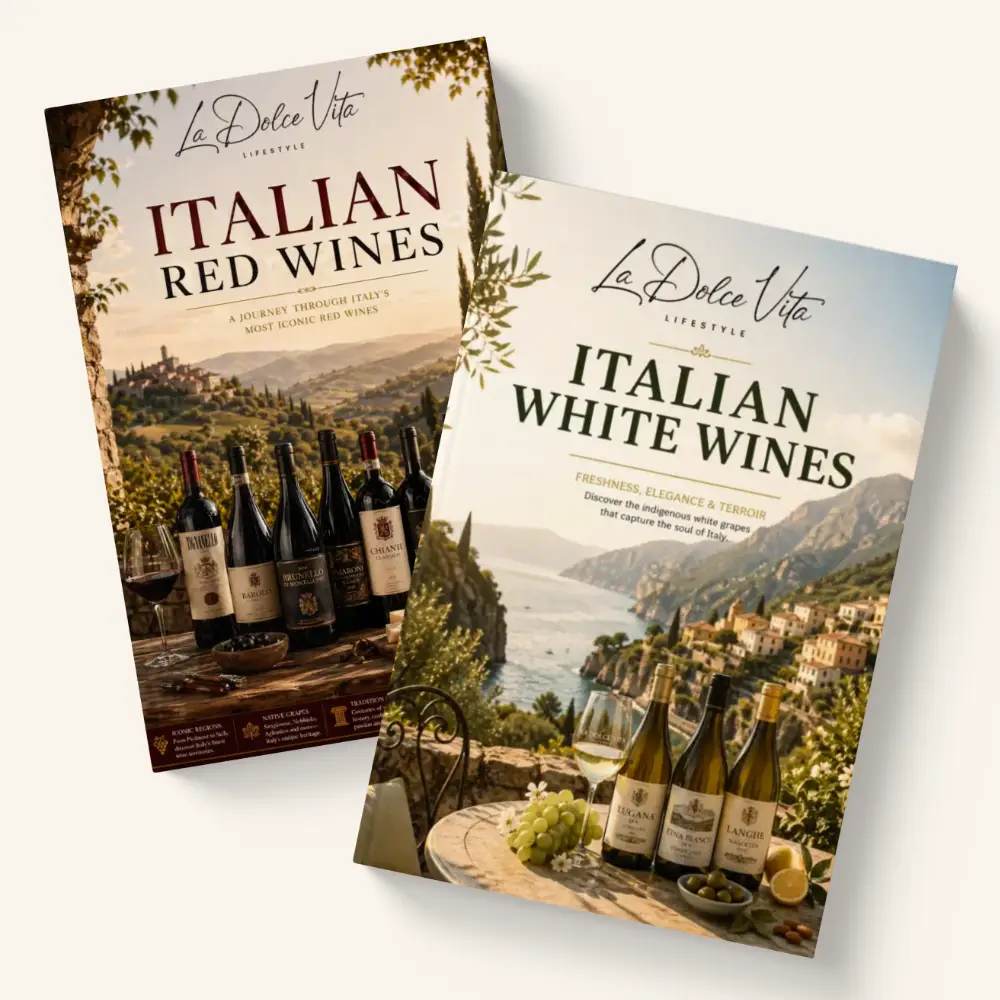
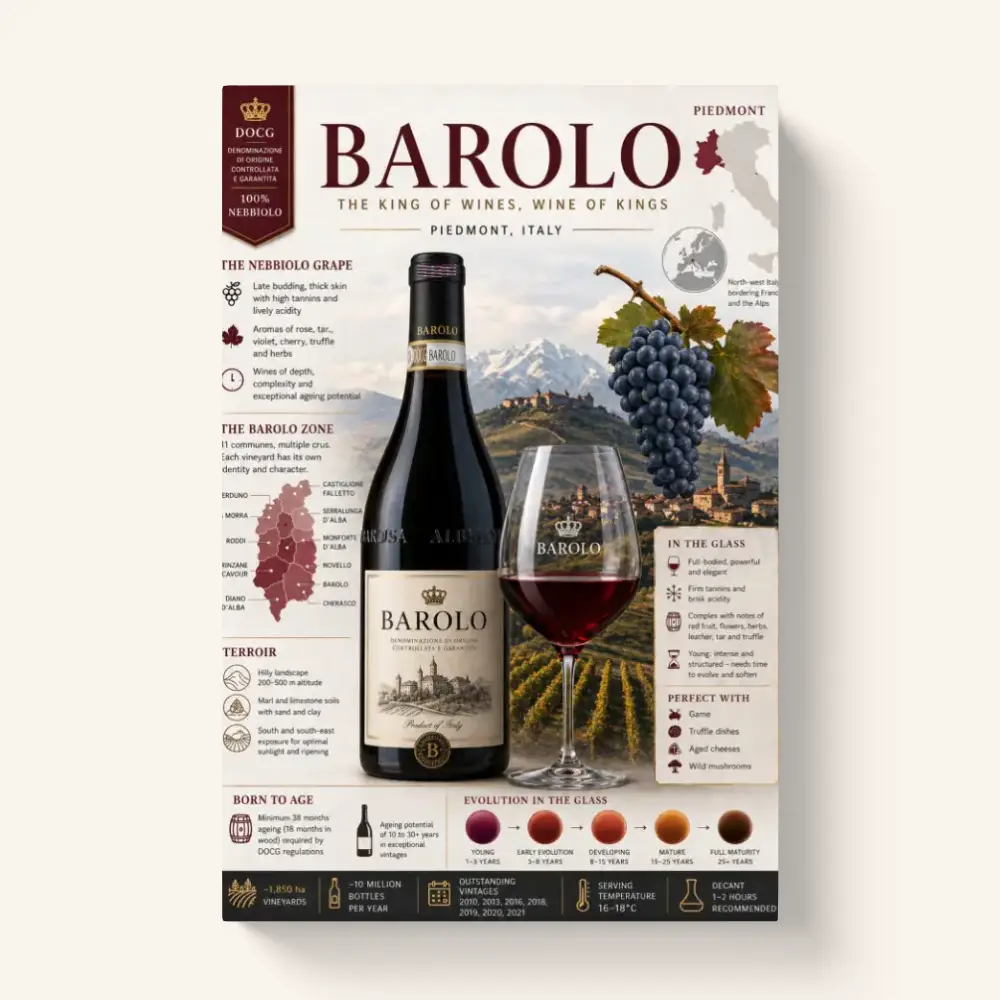
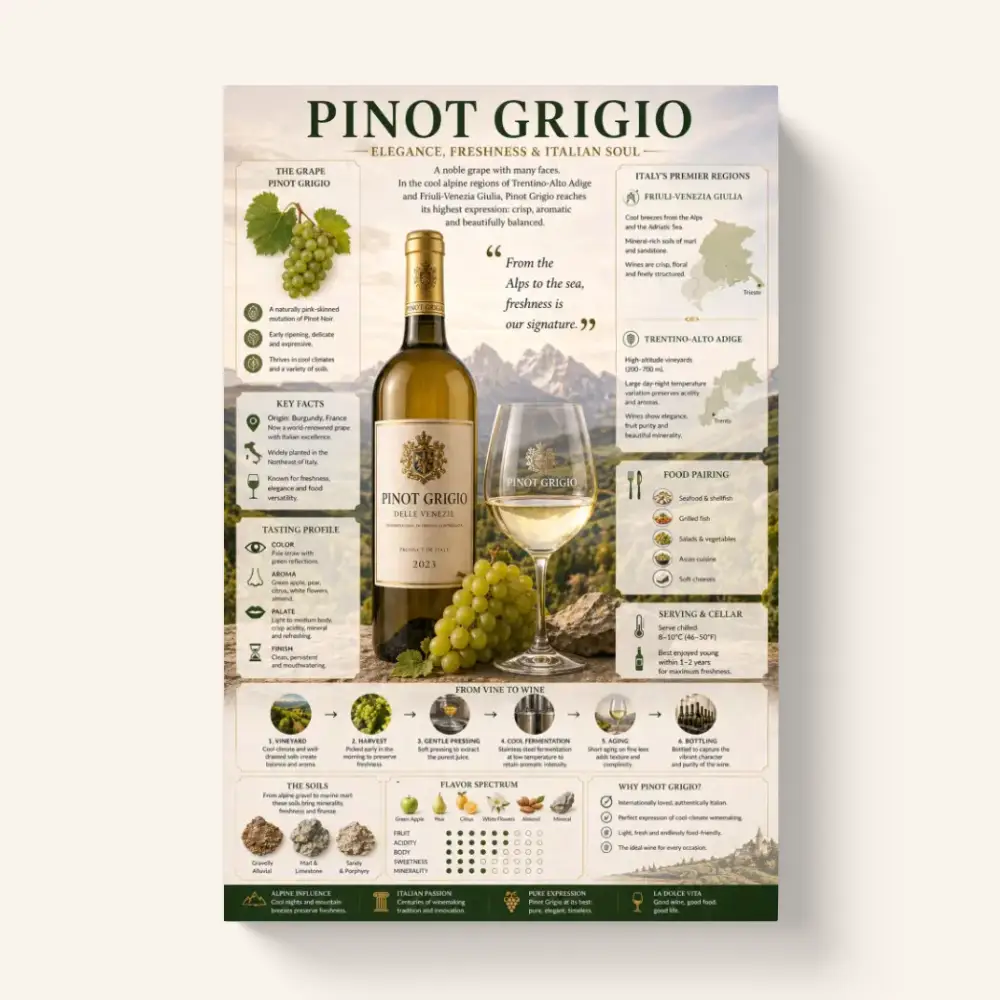
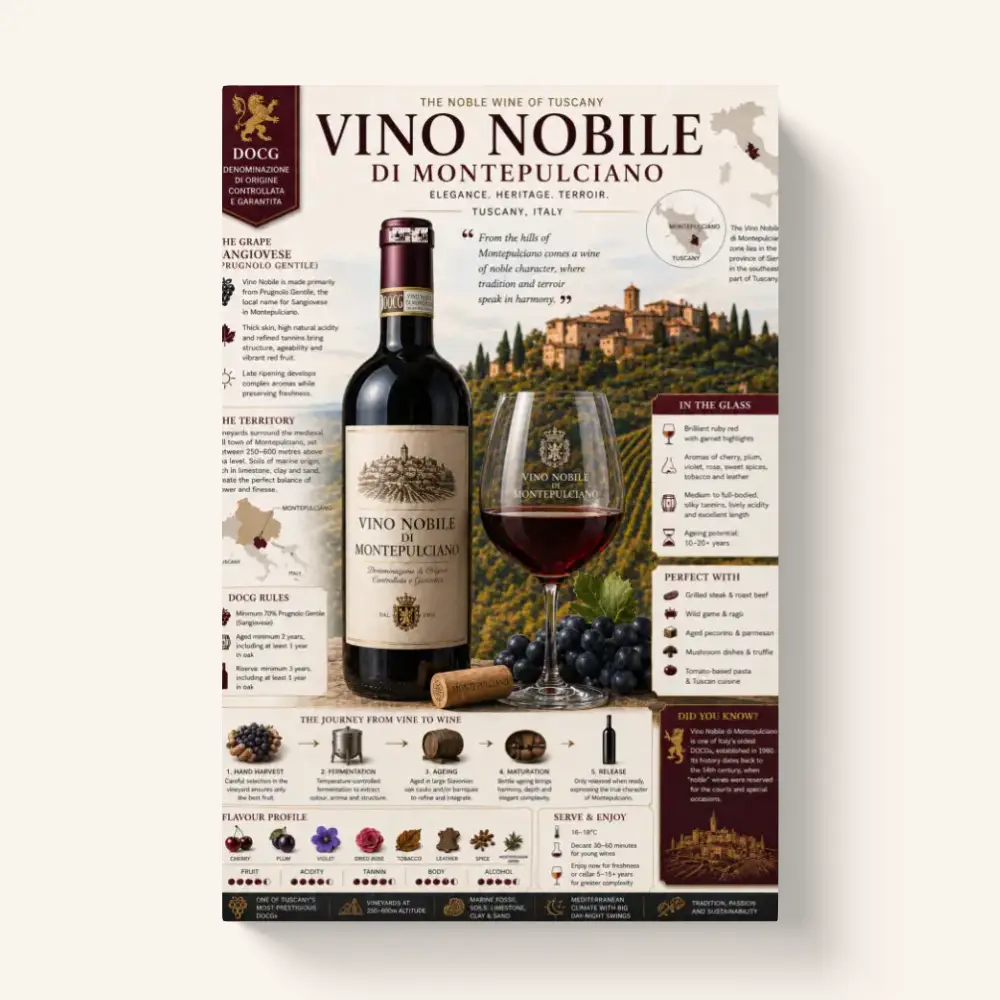
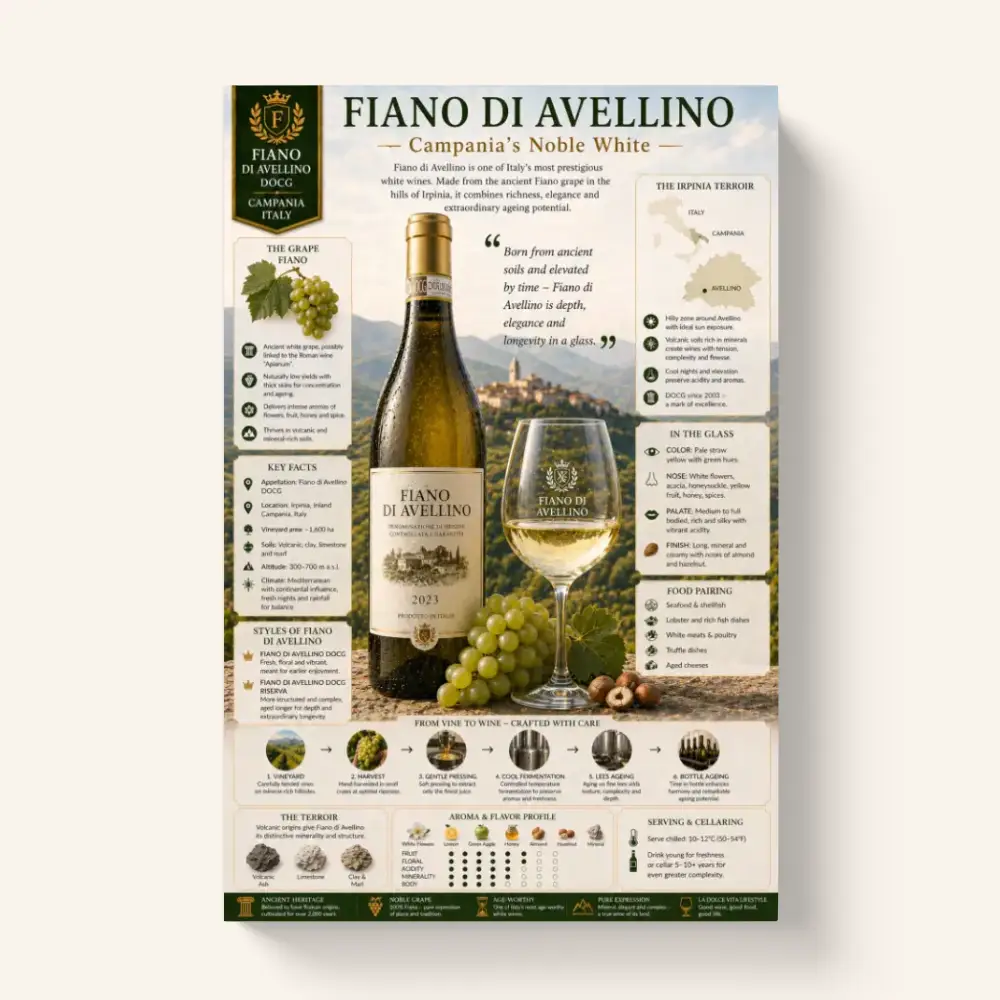
Italian Wine Collection (Digital Bundle)
(including € 1,74 VAT)
Discover the best of Italy in one elegant bundle. This beautifully designed set combines both Italian Red Wines and Italian White Wines, guiding you through the country’s most iconic regions, grapes, and flavours.
From bold, full-bodied reds to fresh, refined whites — everything you need to explore Italian wine with confidence and style.
✔ 2 premium digital guides in one bundle, 32 pages
✔ Instant download
✔ Elegant design (perfect for print or tablet)
✔ Ideal for wine lovers or as a stylish gift
Experience the full spectrum of Italian wine the effortless La Dolce Vita Lifestyle way.