
There is a reason why Italians rarely choose their pasta shape at random. A silky ribbon of tagliatelle behaves differently from a ridged rigatoni, just as a delicate seafood sauce deserves something quite different from a slow-cooked ragù. Every curve, hollow and textured surface has a purpose, transforming the way sauce clings, flavours mingle and each mouthful feels.
With World Pasta Day approaching on 25 October, followed by an international pasta industry gathering in Parma on 27 and 28 October 2026, it is an appropriate moment to appreciate one of Italy’s most ingenious culinary traditions. Beyond the familiar spaghetti and penne lies a remarkable world of regional shapes, each developed through generations of cooking, local ingredients and an instinctive understanding of texture.
To understand pasta is to discover that its shape is never simply decoration. It is part of the recipe itself.
Why Pasta Shapes Matter More Than You Think


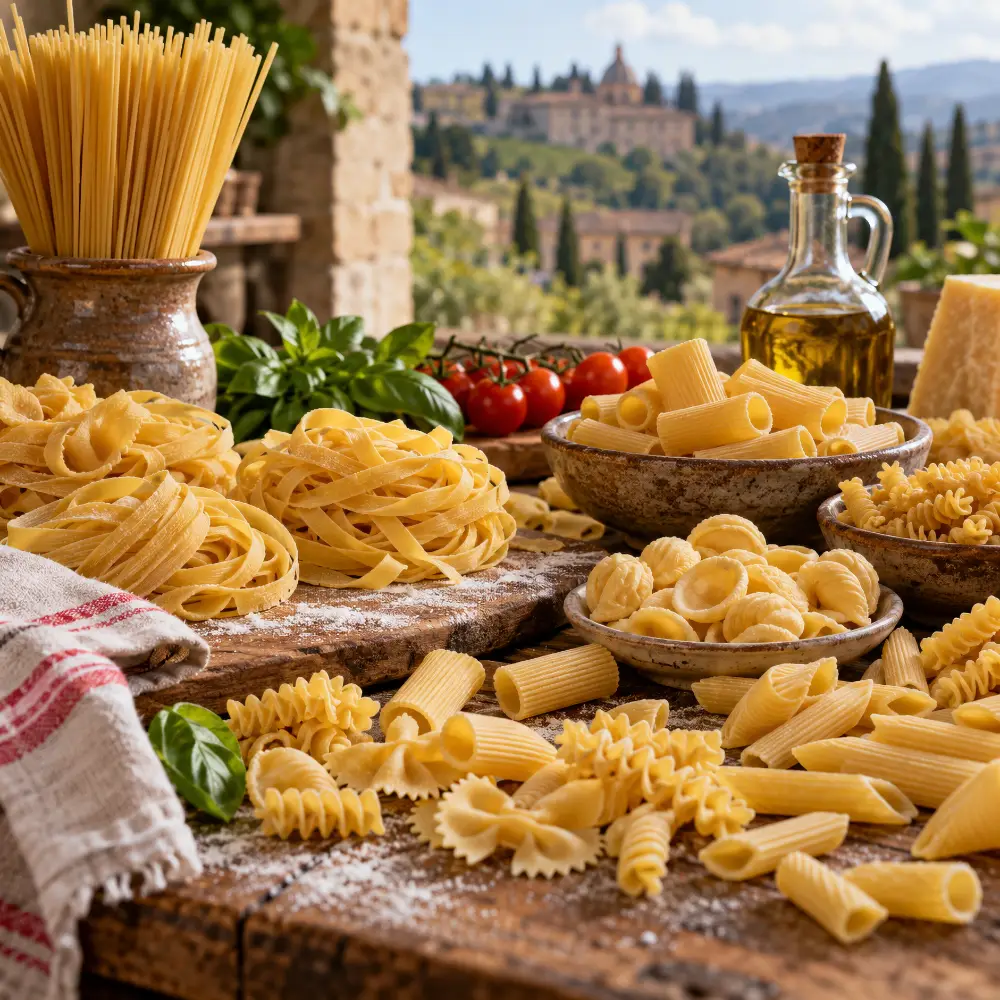
Italy is home to hundreds of recognised pasta shapes, with regional names and variations making an exact count surprisingly difficult. Some are barely larger than grains of rice, while others resemble folded ribbons, little ears, shells or miniature sculptures.
Their differences are far from superficial.
Three characteristics largely determine how pasta interacts with a sauce: surface texture, shape and thickness.
A rough surface creates friction, helping sauces adhere rather than slide away. Hollows and folds capture small pieces of vegetables, meat or seafood. Thickness influences cooking time, resistance to the bite and the richness of sauce a particular shape can comfortably carry.
Even the method of production makes a difference. Traditional bronze-die extrusion, often described on Italian packaging as trafilata al bronzo, creates a slightly rougher exterior than many smooth industrial dies. That texture can help sauce cling to the pasta.
The finest pairing is not necessarily the one with the most elaborate shape. It is the one where pasta and sauce become inseparable.
Long and Elegant: Spaghetti, Linguine and Tagliatelle

Long pasta shapes may appear similar, but their subtle differences can change a dish considerably.
Spaghetti, with its round profile and smooth, slender strands, works beautifully with sauces that coat rather than overwhelm. Think spaghetti aglio e olio, where garlic-infused olive oil, chilli and a little starchy cooking water form a delicate emulsion. The sauce should embrace each strand without collecting heavily at the bottom of the plate.
Linguine, flatter and slightly wider, offers more surface area. It is particularly suited to seafood preparations such as linguine alle vongole, where clam juices, olive oil, garlic and parsley form a light yet flavourful coating.
Then there is tagliatelle, the broad egg-pasta ribbon associated with Emilia-Romagna. Its width and supple texture make it a natural partner for slow-cooked ragù, especially the traditional Bolognese version. The meat sauce settles along the ribbons, delivering richness without requiring excessive quantities.
A lesser-known alternative is trenette, a narrow, flat pasta traditionally associated with Liguria. It is particularly appealing with pesto Genovese, sometimes served with potatoes and green beans in the same dish.
The distinction is worth remembering: a smooth tomato sauce may suit spaghetti, while a substantial meat ragù generally benefits from a broader, more supportive pasta.
Ridges and Tubes: The Genius of Rigatoni and Paccheri

Few pasta shapes demonstrate the relationship between engineering and pleasure quite as clearly as rigatoni.
These generous, ridged tubes have two advantages. Their exterior grooves collect sauce, while their hollow centres accommodate small pieces of meat, vegetables or cheese.
Rigatoni are excellent with robust tomato sauces, sausage ragù and creamy preparations that need something substantial to hold them.
Penne rigate operate on a similar principle, although their smaller size and diagonal ends make them particularly practical for everyday cooking. They work well with arrabbiata, where the ridges hold the spicy tomato sauce and the tubes occasionally trap little pockets of it.
For something more dramatic, consider paccheri, the large, wide tubes traditionally associated with Campania. Their generous diameter makes them particularly satisfying with seafood, slow-cooked tomatoes or rich sauces containing aubergine.
Paccheri can also be stuffed and baked, although their beauty often lies in their simplicity. A few perfectly cooked tubes with fresh tomato, basil and excellent olive oil can be more memorable than an elaborate preparation.
An intriguing regional alternative is calamarata, a thick, ring-shaped pasta resembling sliced squid. Popular in southern Italian cooking, it is particularly suited to calamari and other seafood, creating an appealing visual and textural relationship between the pasta and its ingredients.
Little Ears and Twisted Spirals: Shapes That Catch Every Drop

Travel through Puglia and you will encounter one of Italy’s most distinctive pasta traditions: orecchiette.
Their name means ‘little ears’, an affectionate description of the small, concave discs traditionally shaped by hand. Each piece has a slightly thicker rim and a thinner centre, producing a pleasing variation in texture.
Their hollow shape is especially effective with cime di rapa, the pleasantly bitter leafy greens used in the classic Puglian dish. Olive oil, garlic, anchovies and chilli bring the ingredients together, while the pasta’s curved surface gathers the finely chopped vegetables.
For a familiar alternative, fusilli provide a different kind of sauce-catching architecture. Their spirals hold pesto, tomato sauces and small pieces of vegetables between the twists.
A more unusual relative is trofie, the short, twisted pasta associated with Liguria. Traditionally paired with basil pesto, trofie offer a firm, satisfying bite and enough surface irregularity to carry the fragrant sauce.
In Sardinia, malloreddus, often called Sardinian gnocchetti, bring another interpretation. These small, ridged, shell-like pieces are particularly good with sausage and tomato sauce, including the island’s traditional malloreddus alla Campidanese.
What unites these regional shapes is their ability to capture ingredients that might otherwise remain scattered across the plate.
Filled, Folded and Delicate: When Pasta Becomes the Centrepiece

Not every pasta shape is designed to carry sauce on its exterior.
Filled pasta introduces another dimension, where the dough becomes a delicate enclosure for carefully balanced ingredients.
Ravioli may contain ricotta and spinach, pumpkin, mushrooms or seafood. Their relatively thin pasta sheets often benefit from restrained accompaniments, allowing the filling to remain the focus.
A classic example is pumpkin-filled ravioli or tortelli dressed with butter and sage. The sauce adds fragrance and richness without concealing the sweetness of the filling.
Tortellini, particularly those associated with Bologna and Modena, are traditionally served in a clear, deeply flavoured broth. Here, the pasta’s folded shape protects the filling while allowing the broth to contribute its own subtle complexity.
For a lesser-known regional speciality, consider culurgiones from Sardinia. These carefully sealed pasta parcels, often filled with potato, pecorino and mint, are distinguished by their beautiful wheat-ear-style closure.
Their intricate appearance is undeniably attractive, but the folds also perform the essential task of keeping the filling securely enclosed during cooking.
A Practical Guide to Pairing Pasta Shapes and Sauces
The easiest way to choose pasta is to consider the consistency of the sauce and the size of its ingredients.
| Pasta shape | Best sauce pairing | Regional alternative |
|---|---|---|
| Spaghetti | Aglio e olio, smooth tomato | Spaghettoni |
| Linguine | Clams, seafood, light olive oil sauces | Trenette |
| Tagliatelle | Slow-cooked meat ragù | Pappardelle |
| Rigatoni | Sausage ragù, rich tomato sauces | Tortiglioni |
| Penne rigate | Arrabbiata, vegetable sauces | Mezze maniche |
| Fusilli | Pesto, vegetable-based sauces | Trofie |
| Orecchiette | Cime di rapa, broccoli, sausage | Strascinati |
| Paccheri | Seafood, tomato, aubergine | Calamarata |
| Malloreddus | Sardinian sausage and tomato sauce | Cavatelli |
| Ravioli | Butter and sage, delicate sauces | Agnolotti |
These are culinary traditions rather than absolute rules. A good pairing depends as much on the preparation as on the pasta itself.
A useful principle is to match delicate pasta with lighter sauces and more substantial shapes with richer, chunkier preparations.
The Small Details That Make a Pasta Dish Exceptional

Choosing the right shape is only the beginning. Several small techniques can dramatically improve the finished dish.
First, cook pasta until al dente, retaining a gentle resistance at its centre. The exact texture varies with the shape, but pasta should never become so soft that its structure disappears.
Second, reserve some cooking water before draining. The starch released during cooking helps bind oil, cheese and other sauce ingredients into a cohesive coating.
Third, finish most unfilled pasta in the sauce rather than simply spooning sauce over it. A minute or two of gentle tossing allows the pasta to absorb flavour while the sauce settles into every ridge and curve.
The amount of sauce also matters. Italian pasta dishes are often more restrained than their international interpretations. The goal is not to submerge the pasta but to coat it evenly.
Finally, consider the quality of the pasta itself. A well-made dried pasta, particularly one with a pleasantly textured surface and good cooking stability, can be every bit as satisfying as fresh pasta. Fresh is not automatically superior; the two serve different culinary purposes.
For example, dried spaghetti offers the firm, resilient texture that makes Roman classics such as carbonara and cacio e pepe so appealing, while fresh egg tagliatelle brings a different softness and richness to ragù.
Discovering Pasta Through Italy’s Regions
One of the most rewarding ways to appreciate pasta is to encounter it where its traditions developed.
In Bologna, tagliatelle al ragù reflects the culinary heritage of Emilia-Romagna, where fresh egg pasta remains central to the local table.
In Bari, particularly around the old town’s Strada Arco Basso, handmade orecchiette are a visible expression of Puglia’s pasta-making culture.
Along the Ligurian coast, trofie and trenette with basil pesto demonstrate how local ingredients, from fragrant basil to olive oil and pine nuts, influence the pasta served with them.
And in Naples, paccheri and other generous southern shapes reflect a cuisine that celebrates ripe tomatoes, seafood and straightforward, deeply satisfying flavours.
These regional relationships are part of what makes Italian pasta culture so fascinating. Shapes evolved through practical needs, available ingredients, local craftsmanship and the cooking habits of individual communities.
They are not simply interchangeable products on a supermarket shelf. They carry the character of the places that created them.
The Beauty of Getting the Shape Right
A beautifully prepared pasta dish rarely needs an extravagant list of ingredients. Often, its success rests on a few carefully considered decisions: the right shape, an appropriate sauce, good olive oil, proper cooking and a confident sense of restraint.
The difference between spaghetti and linguine, rigatoni and paccheri, or fusilli and trofie may seem modest at first glance. Yet each brings its own texture, rhythm and balance to the plate.
That is the quiet brilliance of Italian pasta. What appears to be an almost endless collection of decorative shapes is, in fact, a remarkably sophisticated culinary language.
And once you begin to understand that language, even the simplest bowl of pasta becomes a little more interesting.